Subscribe to the «Plyos Walks» channel on social media — we share useful posts to help you prepare for your trip to Plyos!
Beautiful photos and videos, event announcements, interesting places, discounts and promotions, unique routes, and tips from locals!
The Plyos fortress was located on Cathedral Hill in Plyos, on the right bank of the Volga and the left bank of the Shokhonka River. Thanks to its strategically important position and architectural features, Plyos played a significant role in the defense of the Vladimir-Suzdal principality and in the policy of strengthening the Moscow principality.
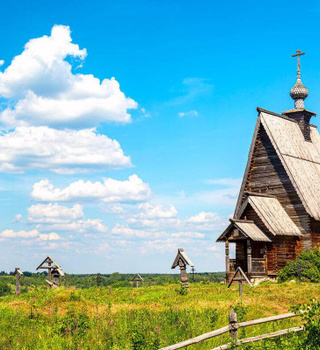
The first Plyos fortress was presumably built in the 12th century when Plyos was founded as a border outpost of the Vladimir-Suzdal principality. The main task of the fortress was to protect the northern borders from threats from the Volga Bulgaria and other external enemies. However, in February 1238, during the Mongol-Tatar invasion, the fortress was destroyed and burned by the Mongols. After its destruction, its territory was used as a cemetery, indicating significant destruction and loss of its defensive function.
In the early 15th century, the Moscow principality was actively engaged in centralizing power and strengthening its positions amidst the weakening of the Golden Horde and internal political instability in Russia. An important step in this process was the construction of a new Plyos fortress in 1410 at the initiative of Grand Duke Vasily I Dmitrievich of Moscow (son of Dmitry Donskoy). Seeking to strengthen the Moscow principality and ensure control over key trade routes, Vasily I saw the strategic significance of Plyos as an important stronghold on the Volga and "ordered the city of Plyos to be built". This marked the official beginning of the city of Plyos.
The Plyos fortress was built to strengthen Moscow's positions in this key area and to protect an important trade route connecting the North and South of Russia. This fortress became part of an extensive system of customs and defensive structures designed to control the Volga and ensure Moscow's influence over trade flows.
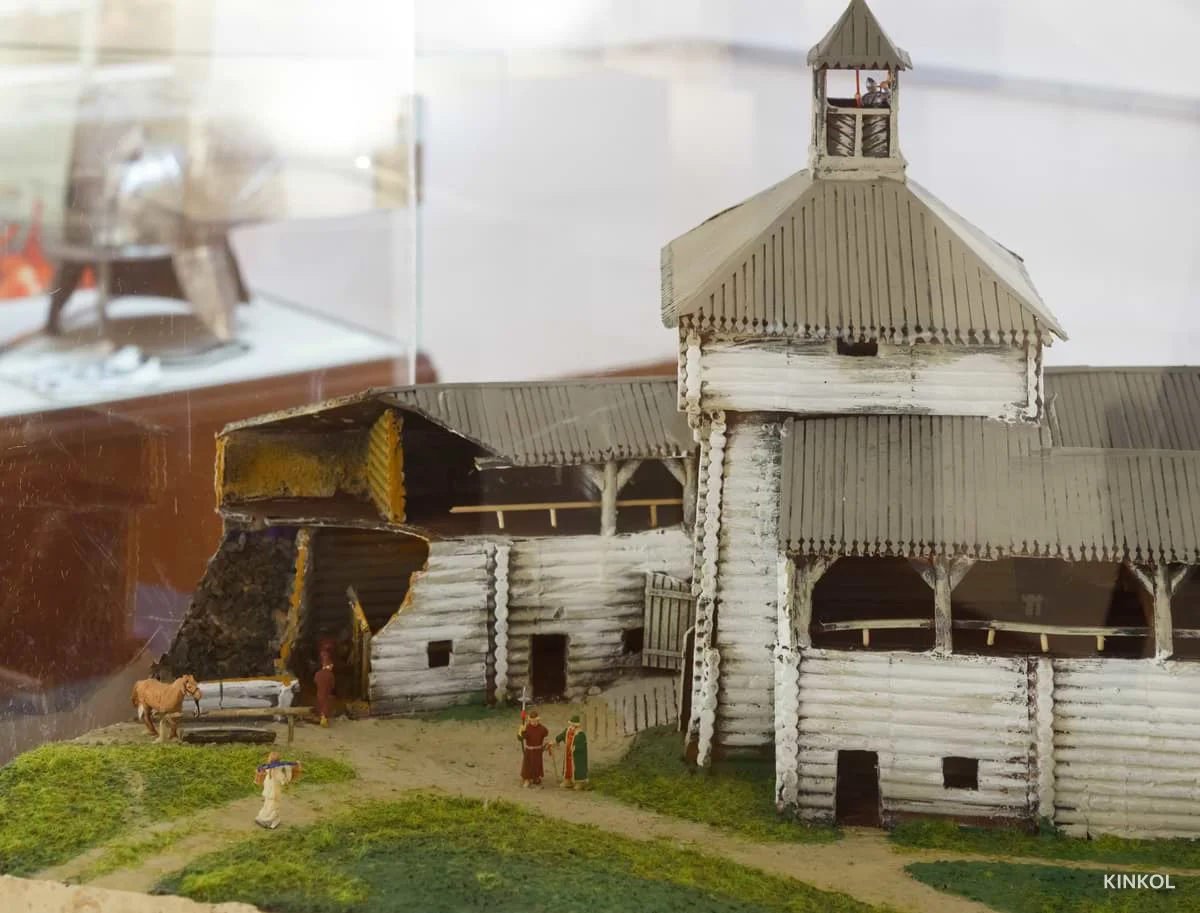
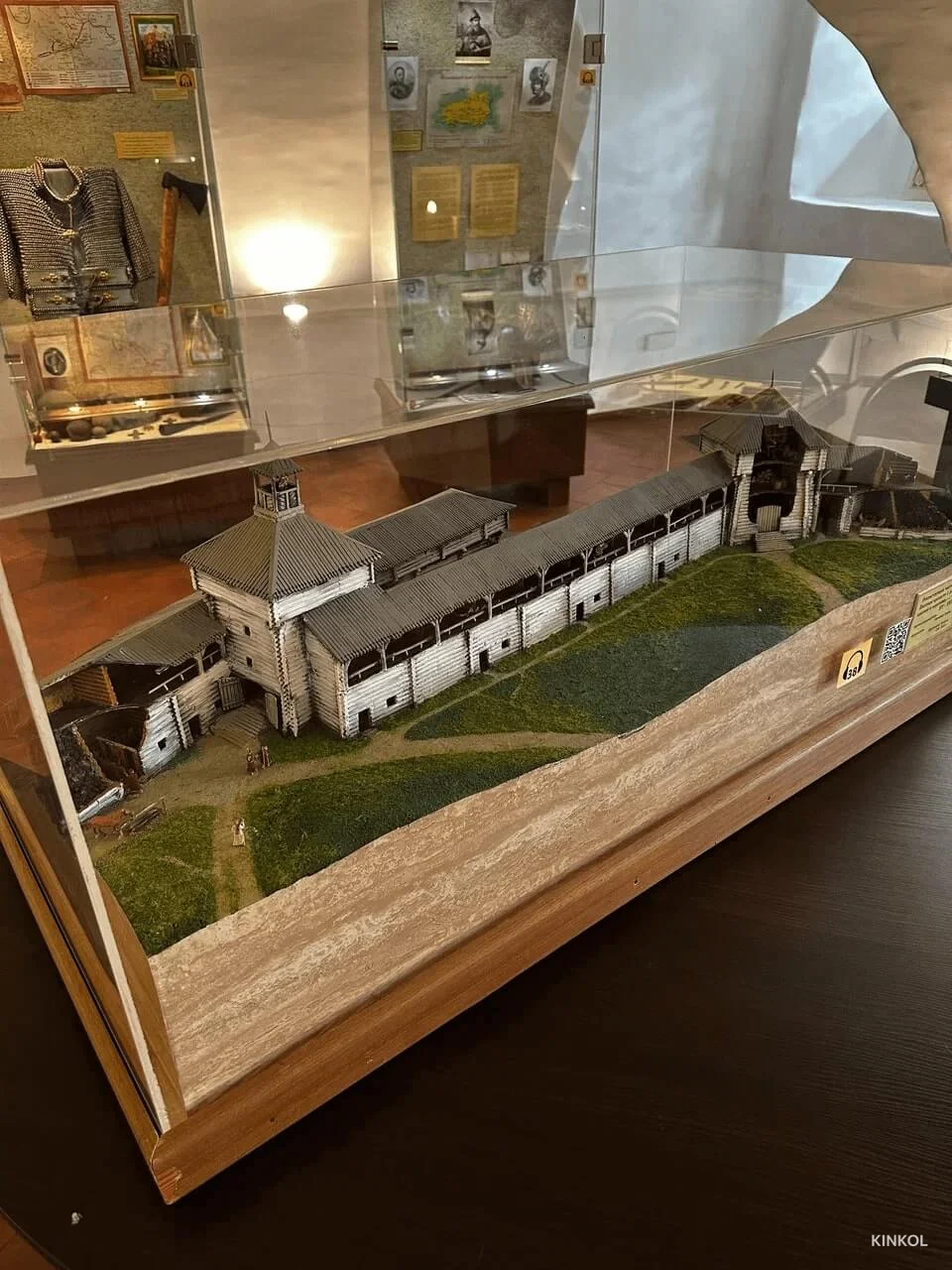
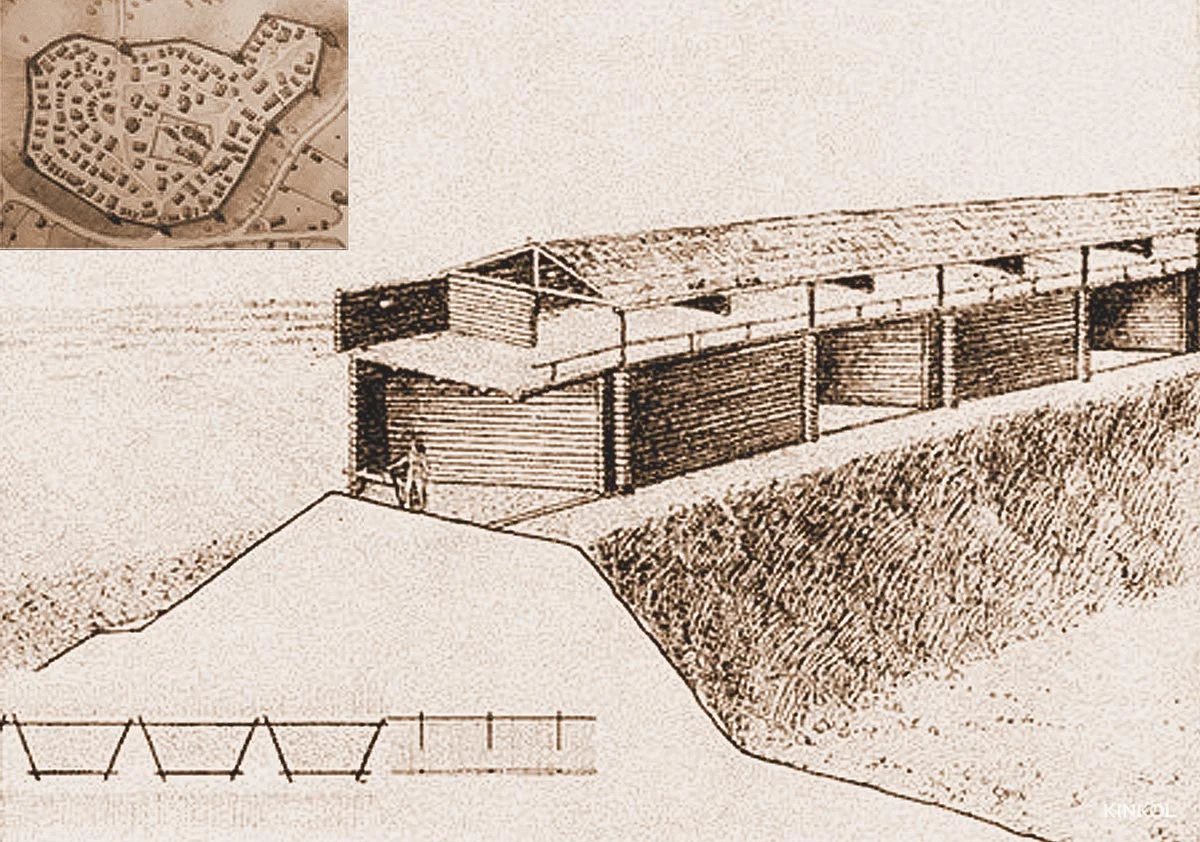
The second Plyos fortress was a wooden citadel surrounded by a high earthwork and located on an elevation above the Volga. The fortress was built on Cathedral Hill, providing a strategic advantage and control over a significant section of the river.
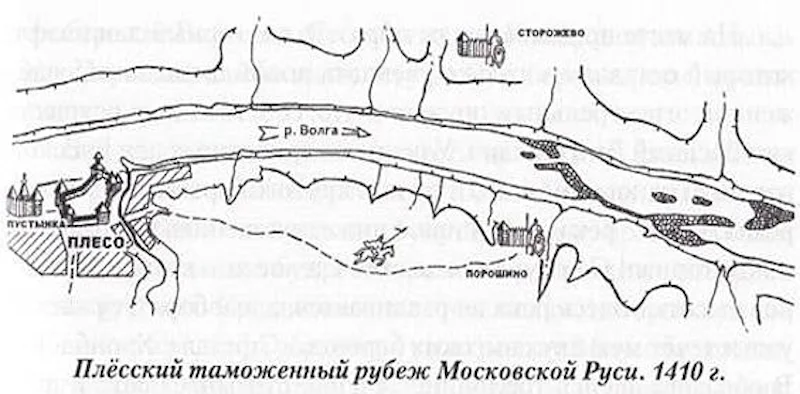
The fortress walls were reinforced with signal towers and observation posts, forming a network of "signal axes". The main signal axis connected Plyos with the village of Storozhevo, from where it was possible to observe movement along the Volga for more than 20 kilometers upstream. This allowed for early detection of enemy approach.
The defensive system of the fortress included a massive earthwork on the southern side, 170 meters long, 6 meters high, and 29 meters wide. This earthwork created a significant obstacle for attackers. Inside the earthwork, walls were erected, consisting of multi-layered structures. The outer part of the walls was made of hewn pine logs, and the inner space was filled with bricks and stones, enhancing the defensive properties.
The northern tower of the fortress had two layers of walls, with a layer of bricks in between, providing additional protection. The towers were square, built from logs up to 20 cm in diameter and up to 9 meters long, as well as brickwork for added strength.
Besides its defensive function, Plyos also played an important role in customs control. The fortress served as a point for collecting duties for passage along the Volga, allowing control over trade flows and providing income for the Moscow principality. Control was especially important in the context of increasing competition with Novgorod, which sought to control Volga trade.
According to "Journey Beyond Three Seas" by the Tver merchant Afanasy Nikitin, Plyos maintained its importance as a trade and customs center even more than 60 years after its construction.
The wooden fortifications of Plyos were designed for long-term use, but they apparently stood only until the Kazan Tatars' invasion, and in 1429 the city was ravaged and burned by the Kazan prince Mahmud Khazi: "...the Kazan Tatars came to Galich without warning..., took Kostroma, and ravaged Plyos and Lukh". Archaeological data confirm extensive destruction: the fortress's structure was severely damaged by fire, and the remains of wooden and brick structures fell into decay.
After the destruction of the second fortress in 1429, attempts were made to restore it, but the new fortress built in the 15th century was significantly less extensive and sturdy. During the Time of Troubles, in 1609, Plyos was taken by Pan Martin Sobelski and Pan Chizhevsky from the regiment of Alexander Lisovsky. After this, the fortifications were never restored, and the ruins eventually decayed.
The fall of the Plyos fortress symbolized not only military defeats but also changes in the strategic importance of the region. Despite losing its defensive significance, Plyos continued to be an important trade and cultural center.
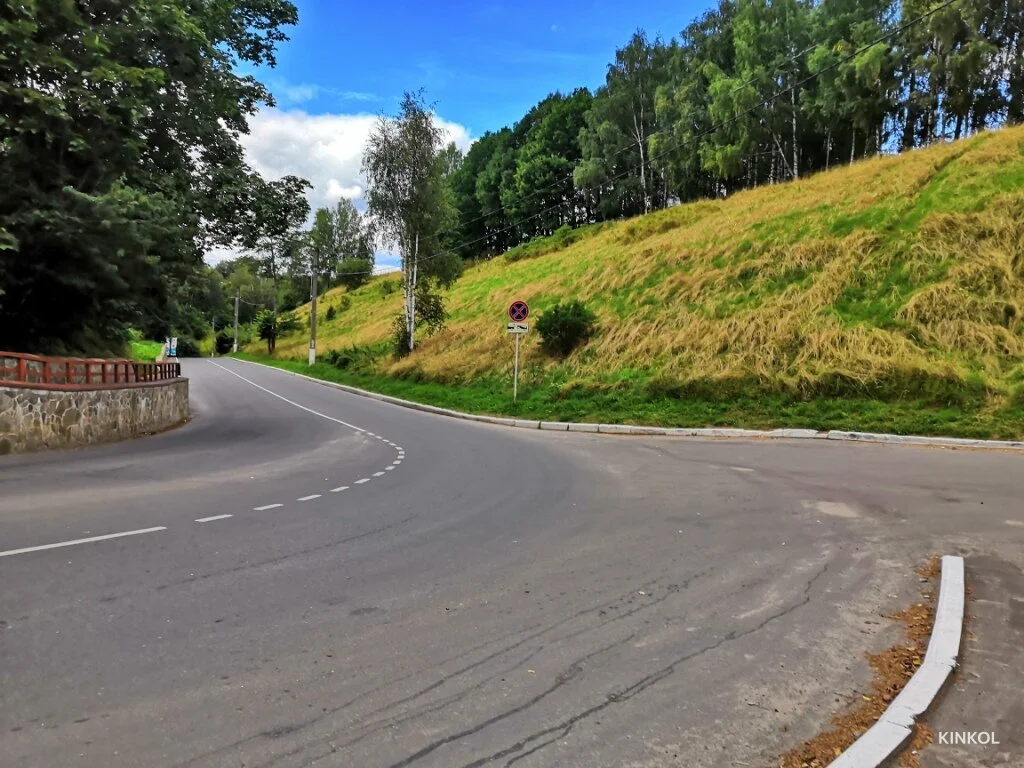
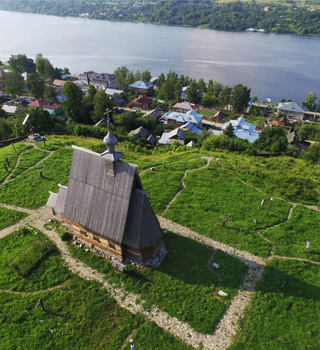
Today, only the earthwork and moat on the southern side of Cathedral Hill remain from the Plyos fortress, representing an elevation in the landscape that allows one to imagine its original appearance and functions.
On the northern side of the hill, a viewing platform has been installed, depicting the lower crowns of the watchtower, which was part of the Plyos fortress. The outer part of the walls is made of hewn logs, and the inner space is filled with stones, corresponding to the architecture of the original 15th-century Plyos fortress.