Subscribe to the «Plyos Walks» channel on social media — we share useful posts to help you prepare for your trip to Plyos!
Beautiful photos and videos, event announcements, interesting places, discounts and promotions, unique routes, and tips from locals!
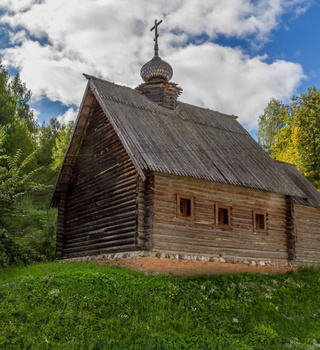
The Church of the Resurrection of Christ on Levitan Hill in Plyos is a striking example of Russian wooden architecture. Transferred from the village of Bilyukovo in 1982, this church serves as an important cultural and historical monument. It replaced the old Church of Peter and Paul, which stood on this site until the early 20th century.
The Church of Peter and Paul was located on Petropavlovskaya Hill (renamed Levitan Hill in 1972). Its history dates back to the 16th century when a cemetery and a wooden church were located on this site. The importance of this place is confirmed by two ancient white stone tombstones found during the reconstruction of Levitan Hill, one of which is dated 1572 and belonged to "the servant of God Sidor Kirillov son Osherin". In the refectory part of the church, there were three crypts, where, according to local legends, "three princesses" were buried.
The Church of Peter and Paul was known not only to local residents but also beyond Plyos. For example, on January 27, 1659, Moscow merchant Eustafiy Kirillov donated a gospel to the church "for his soul and for his parents". This emphasizes the significance of the church as a place of worship and memory.
One of the remarkable elements of the church's iconostasis was the image of the Savior Not Made by Hands with an inscription indicating that it was attached to the apostles Peter and Paul in 1696.
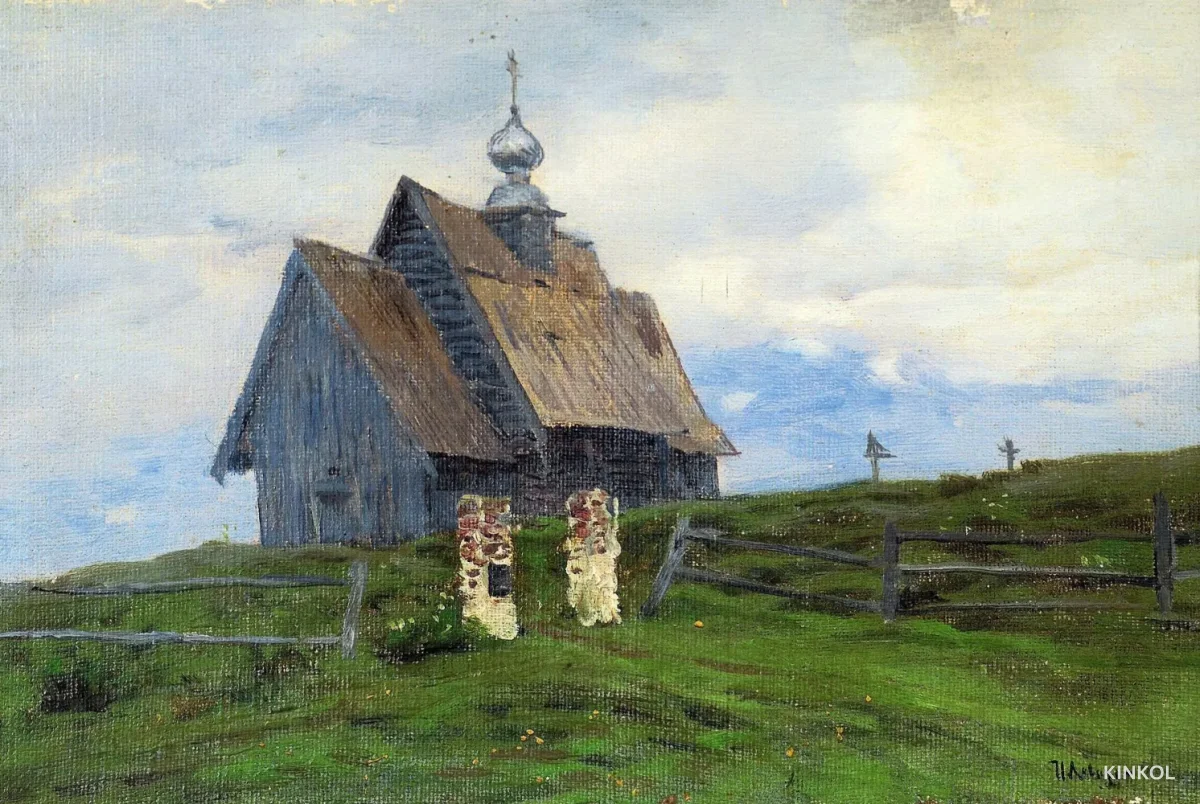
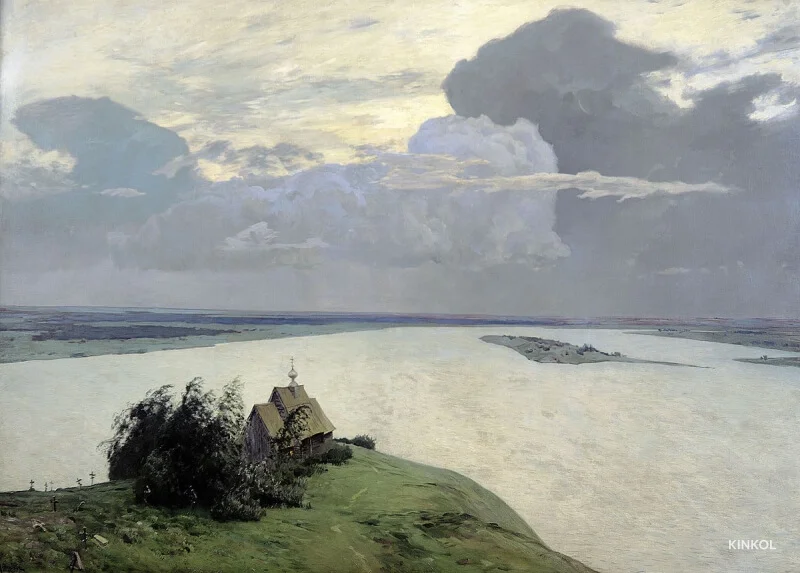
In the summer of 1888, the famous Russian artist Isaac Levitan, traveling along the Volga, was inspired by the view of the old wooden church on Petropavlovskaya Hill. This inspiration led him to decide to stay in Plyos, where he painted works including "Above Eternal Peace" (1894) and "Wooden Church in Plyos at Sunset" (1888). In the painting "Above Eternal Peace", Levitan combines views of Petropavlovskaya Hill and Lake Udomlya in the Tver region.
Unfortunately, in 1903, the Church of Peter and Paul burned down, and this event was a significant loss for Plyos.
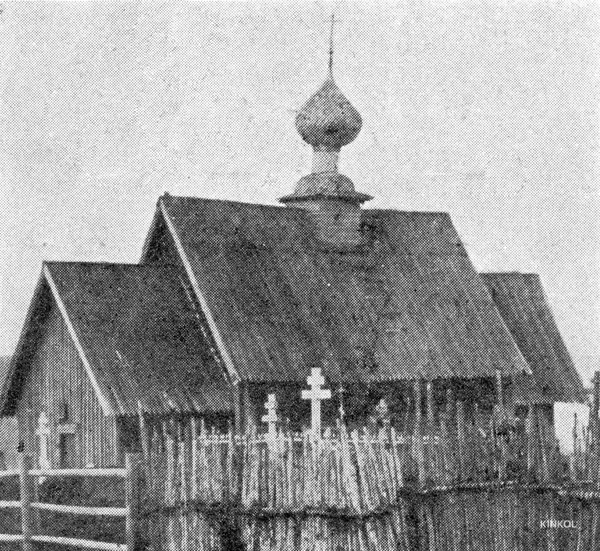
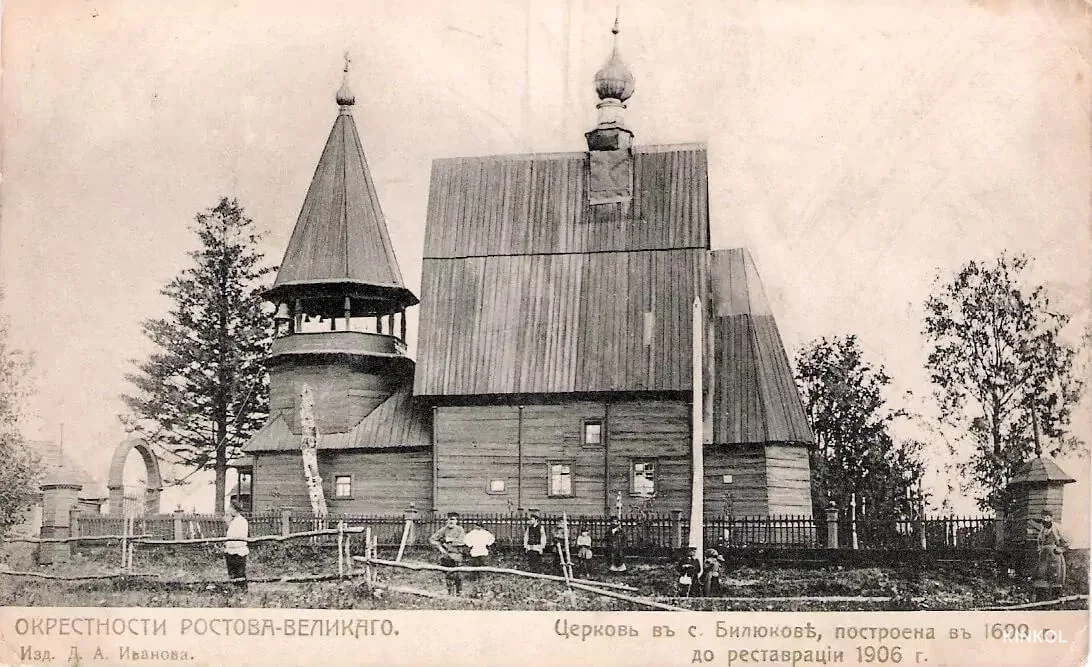
The Church of the Resurrection of Christ was built in 1699 in the village of Bilyukovo, Ivanovo region. Initially, it was a log cabin without cladding, set on a foundation of boulders. In the 19th century, the church walls were clad with planks, and a brick foundation was added under the log structure. A tented bell tower was also added, which unfortunately was destroyed in the 1930s.
After the revolution, the church was used as a village club, leading to significant changes in its interior and architecture. By the 1950s, a hurricane destroyed the church's dome, and the church continued to fall into disrepair.
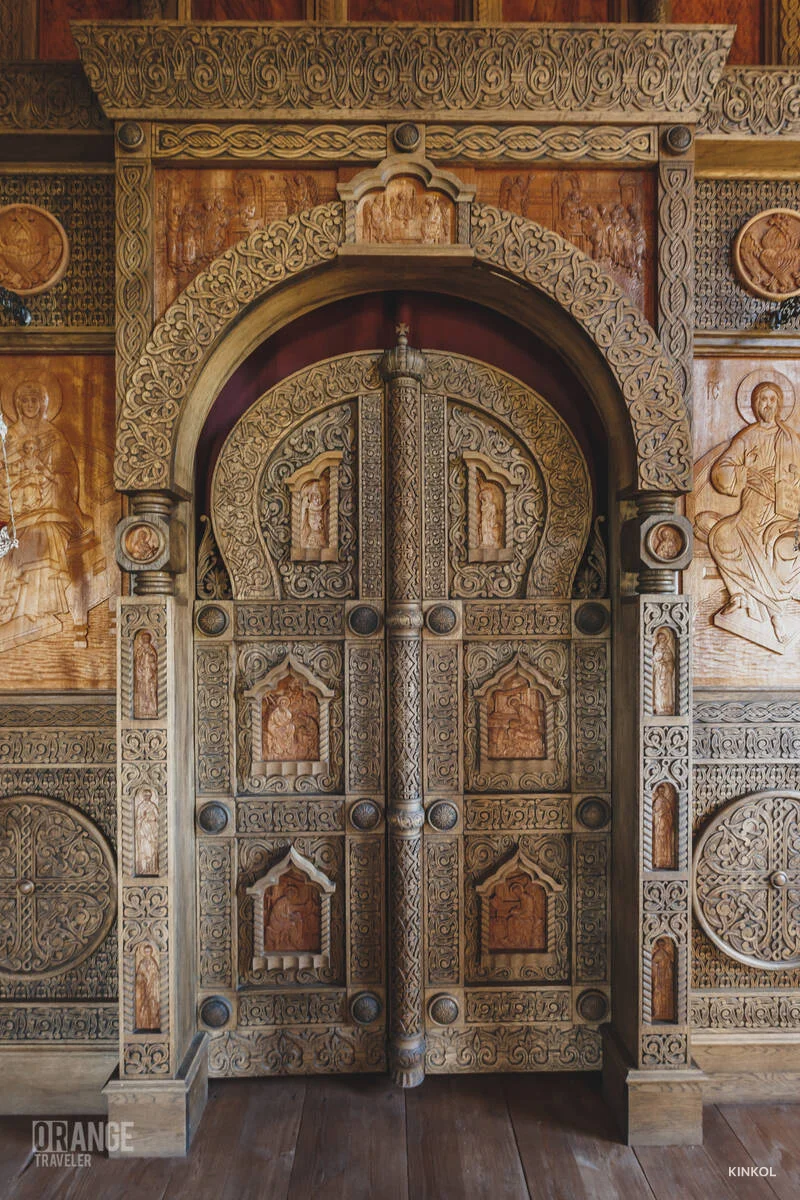
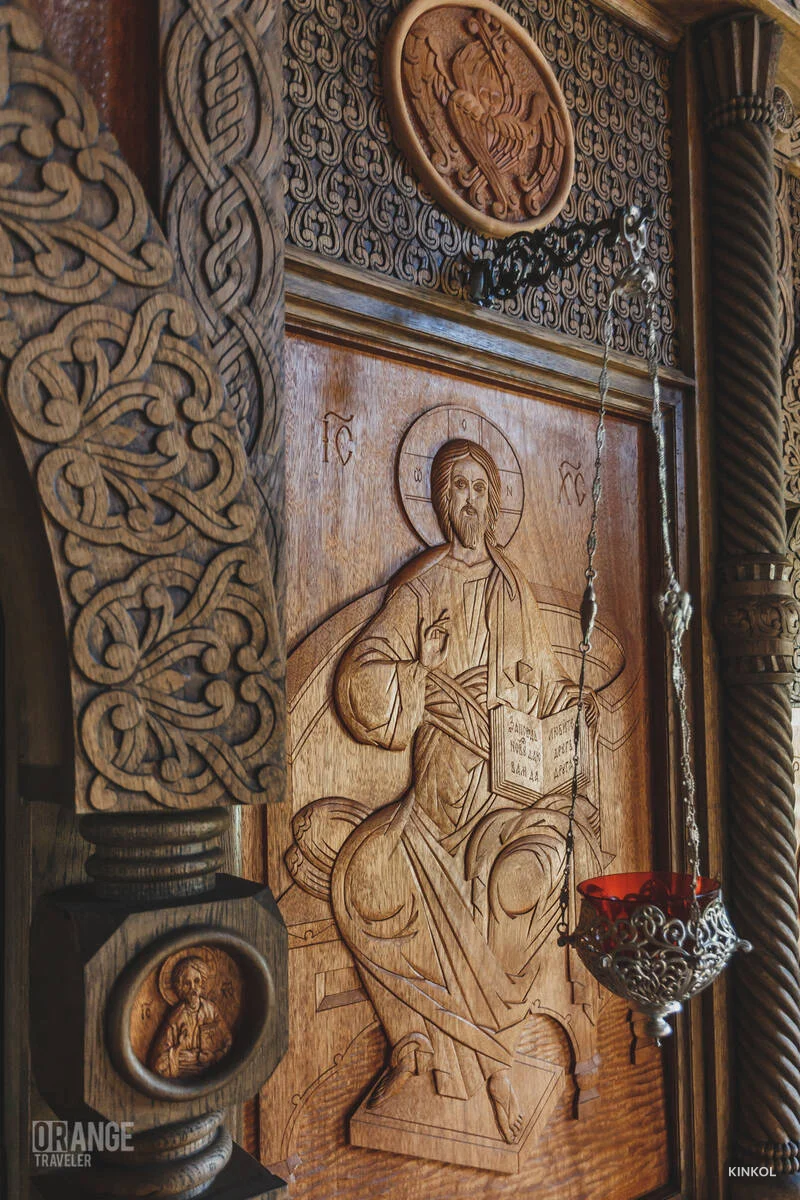
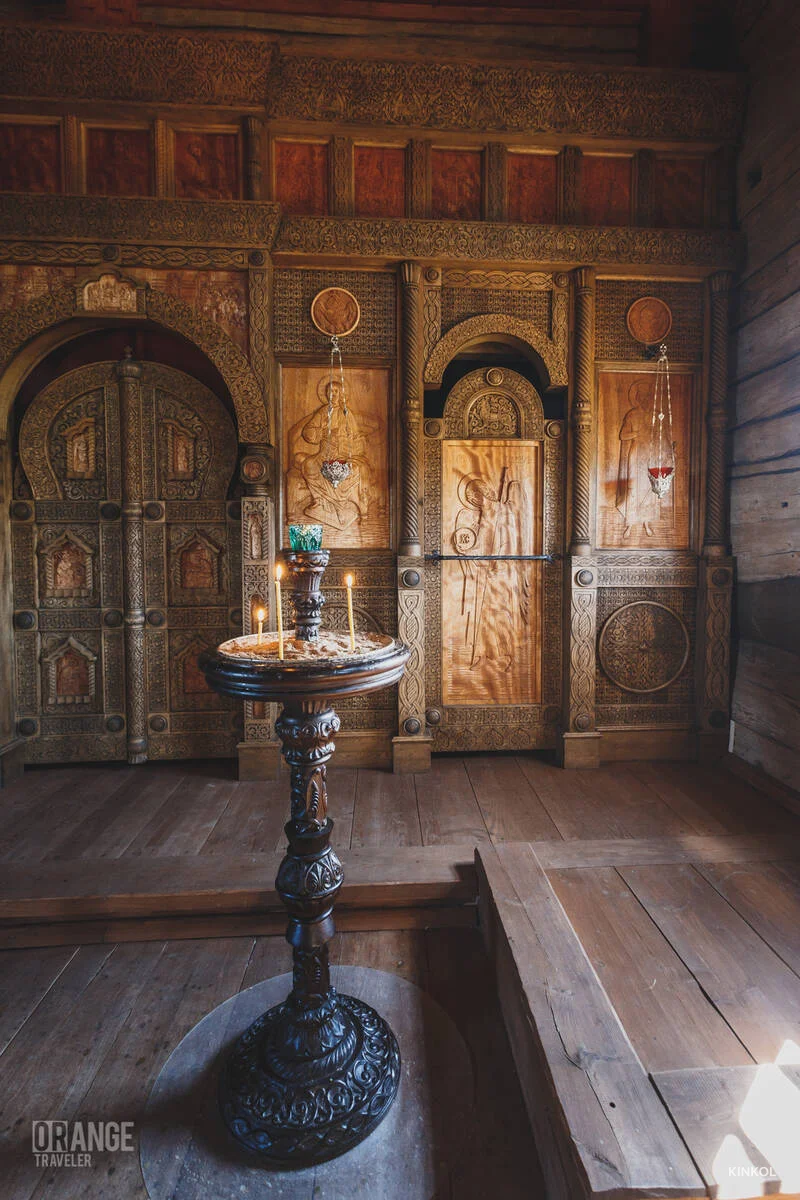
In the early 1980s, it was decided to move the church from the village of Bilyukovo to the site of the burned-down Church of Peter and Paul in Plyos, which had burned down in 1903. The relocation and restoration of the church were carried out according to the project of architect Alexander Opolovnikov in 1982. The restoration included the reconstruction of architectural features and partial restoration of the interior.
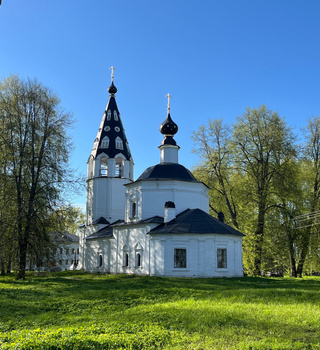
The Church of the Resurrection of Christ is an example of wooden architecture from the northeastern regions of Russia. It consists of three parts of varying heights, hewn "in the paw": a central quadrangle with a high gabled roof, a low refectory with a porch, and a pentagonal altar. This type of construction is characteristic of the log churches of the Kostroma, Vladimir, and Ivanovo regions. The church possesses bright architectural expressiveness, with its form reaching upwards, and the roof crowned with a small dome.
The church has gained significant cultural attention due to its location on Levitan Hill, making it a prominent part of the Plyos landscape. Thanks to Isaac Levitan's painting, the church became known as the "Levitan Church." Levitan captured the church in his paintings, including "Wooden Church in Plyos at the Last Rays of the Sun" and "Above Eternal Rest." Although the paintings depict another church, the relocation of the Resurrection Church to Plyos helped preserve the spirit of wooden architecture that inspired the artist.
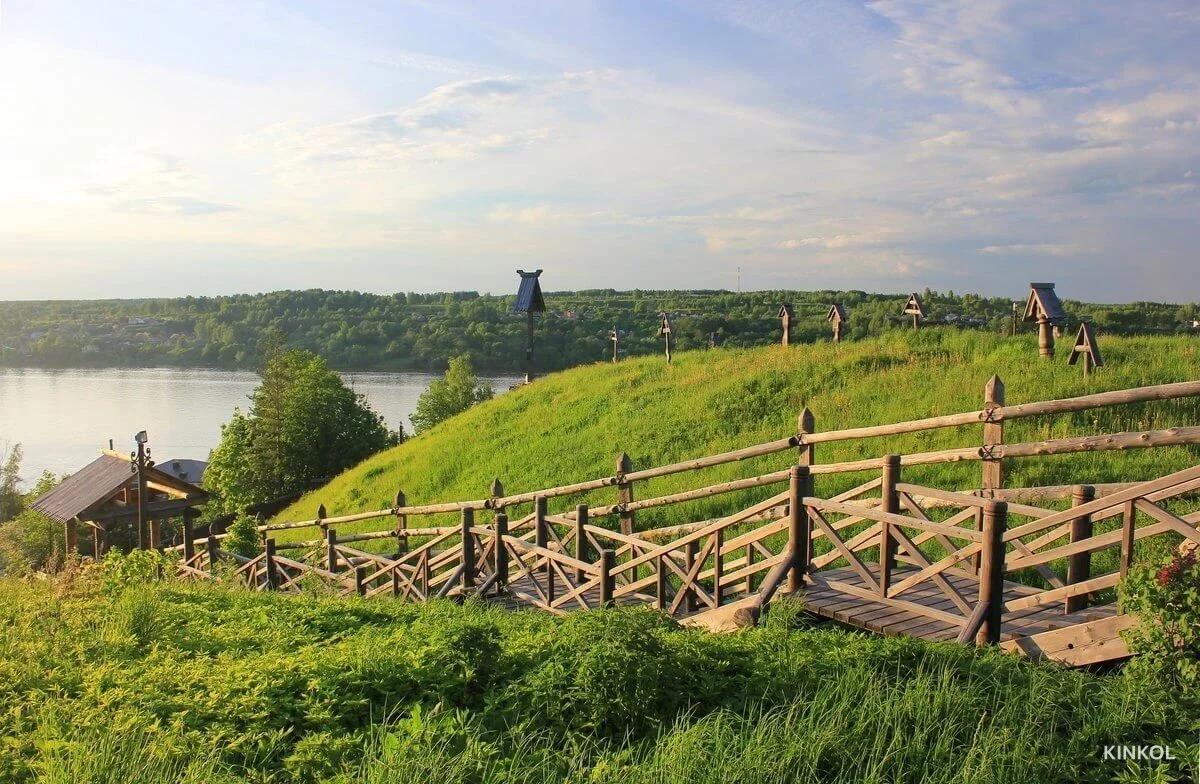
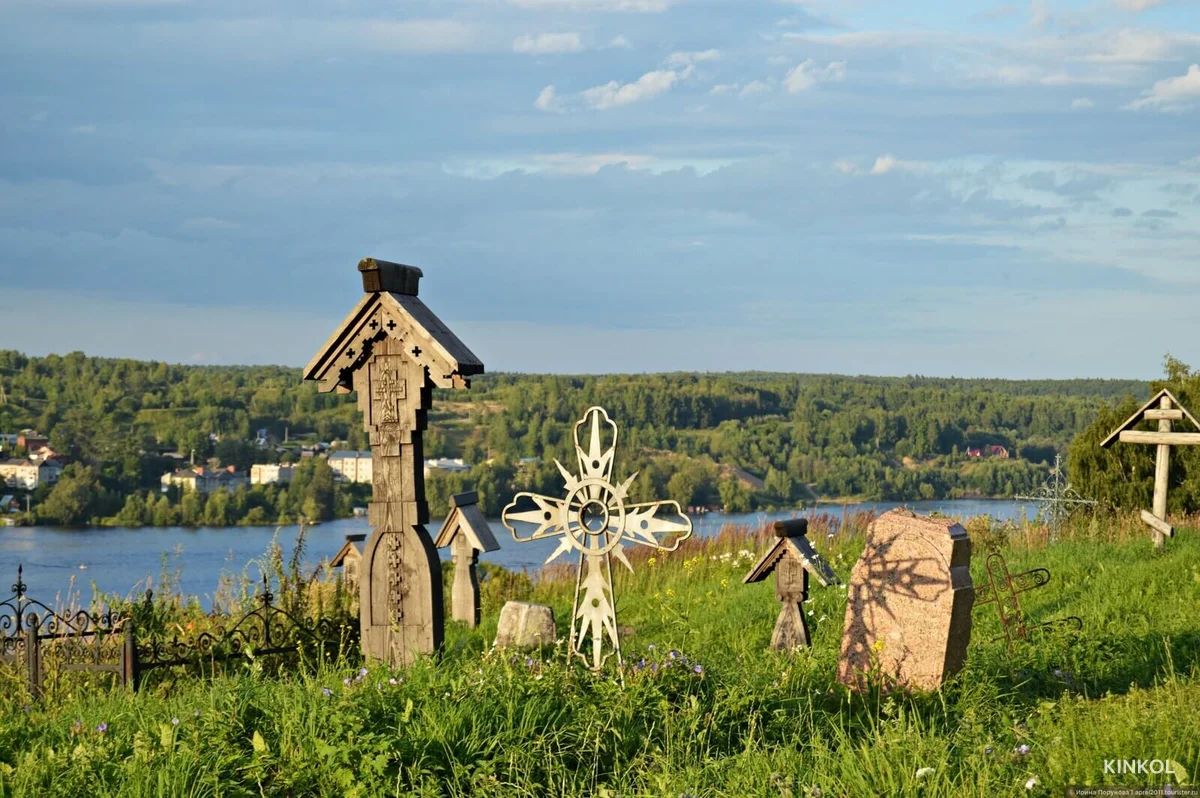
On Levitan Hill, where the church now stands, a wooden staircase was built, blending seamlessly into the landscape. The cemetery depicted in Levitan's paintings is partially lost, but based on drawings and projects, some tombstones have been restored, and a memorial cross has been erected in memory of all those buried here.
Today, the church functions as an active temple where services are held.