Subscribe to the «Plyos Walks» channel on social media — we share useful posts to help you prepare for your trip to Plyos!
Beautiful photos and videos, event announcements, interesting places, discounts and promotions, unique routes, and tips from locals!
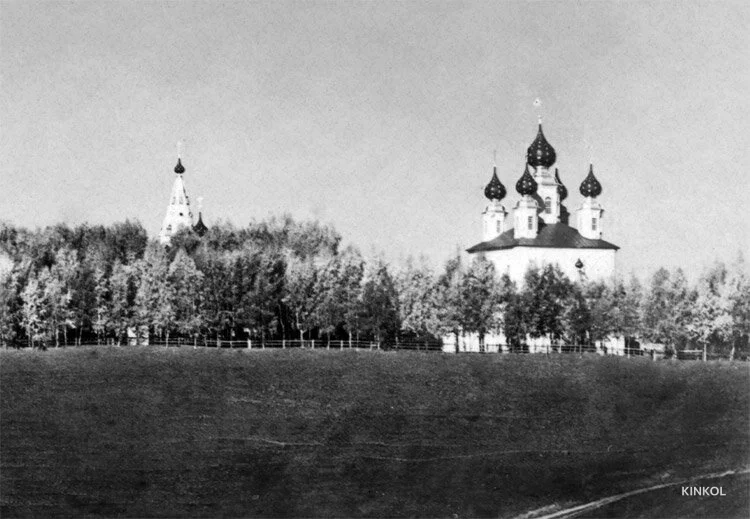
The Cathedral of the Assumption of the Blessed Virgin Mary is the oldest surviving building in the city and the oldest church in the Ivanovo region. Its history begins in the 15th century when the first wooden church was erected on this site by order of Vasily I. This church was part of a fortified complex created to protect against external threats. In 1695, the wooden church burned down, and in 1699, a new stone cathedral was built in its place, replicating the forms of its predecessor.
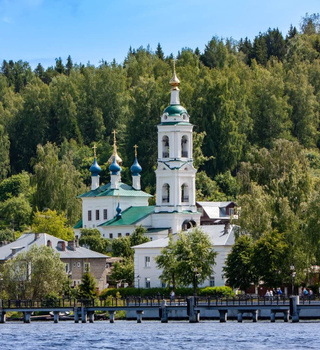
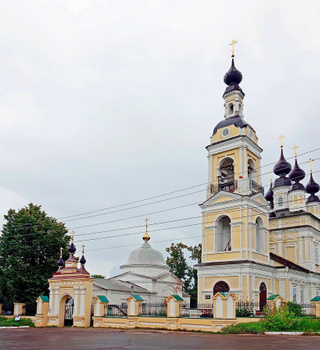
The stone cathedral is executed in the Moscow Baroque style and represents an octagon on a quadrangle. Its side facades are adorned with arched windows framed by half-columns and keel-shaped completions. The bell tower, built at the end of the 18th century, harmoniously fits into the overall architectural ensemble. The tented roof, arched bell openings, and a small dome on an octagonal drum complement the majestic appearance of the cathedral. Despite its simplicity, the cathedral is an outstanding example of provincial church architecture. The interior frescoes of the cathedral, preserved to this day, add additional value and special historical significance.
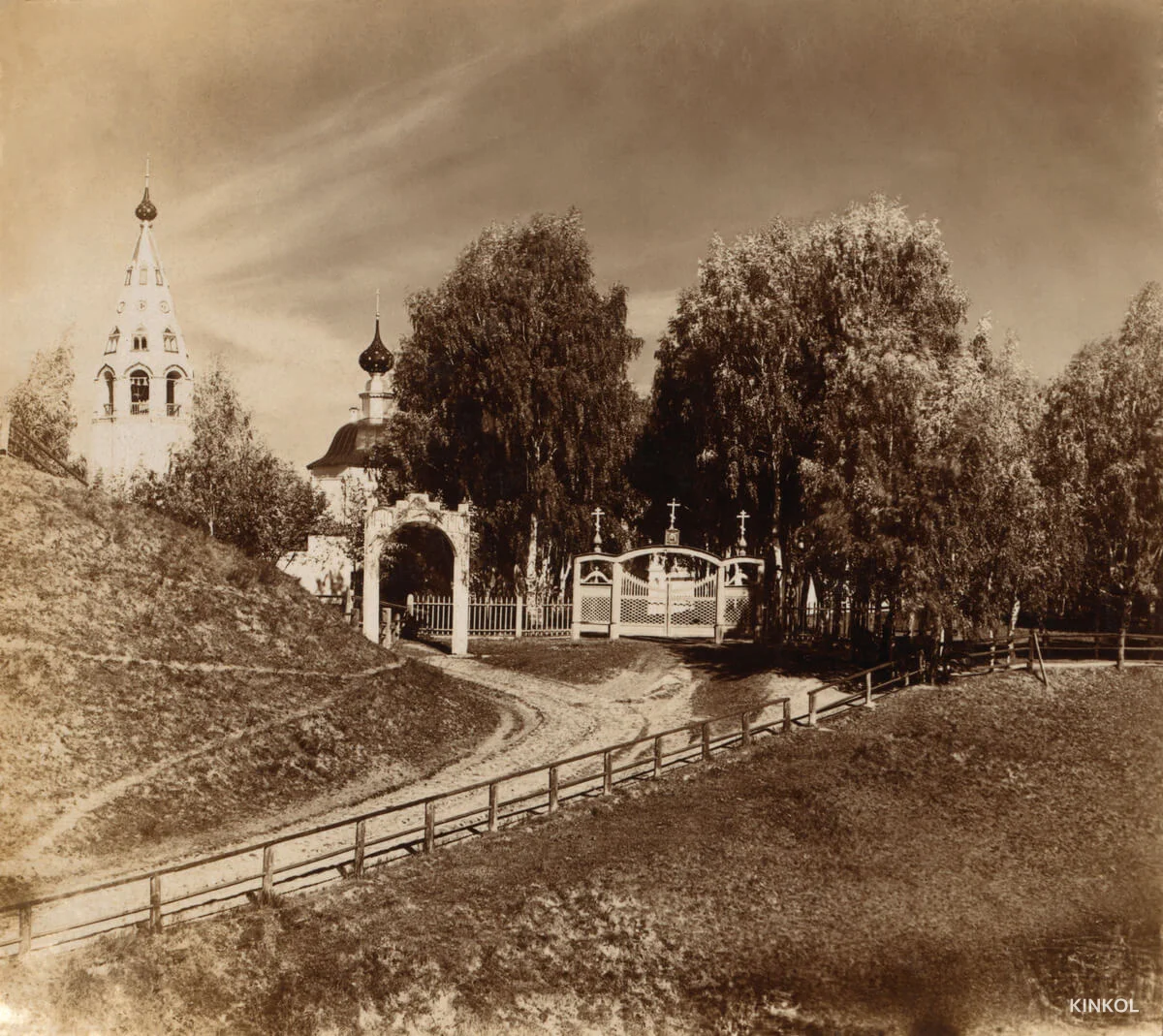
The cathedral played an important role in the life of Plyos for many centuries. In 1828, a summer church of the Kazan Icon of the Mother of God was built next to it, which was destroyed during Soviet times. A commemorative cross now stands where the Kazan Cathedral once was. Unlike many other churches, the Assumption Cathedral was closed only from 1936 to 1944. During this time, it housed a training workshop for the Plyos Agricultural College. The altar was converted into a teaching room, desks for students were placed in the center of the cathedral, and a training tractor was located in the refectory. Perhaps this decision saved the cathedral from further destruction. After 1994, the church was reopened and remained the only functioning Orthodox church in Plyos for half a century.
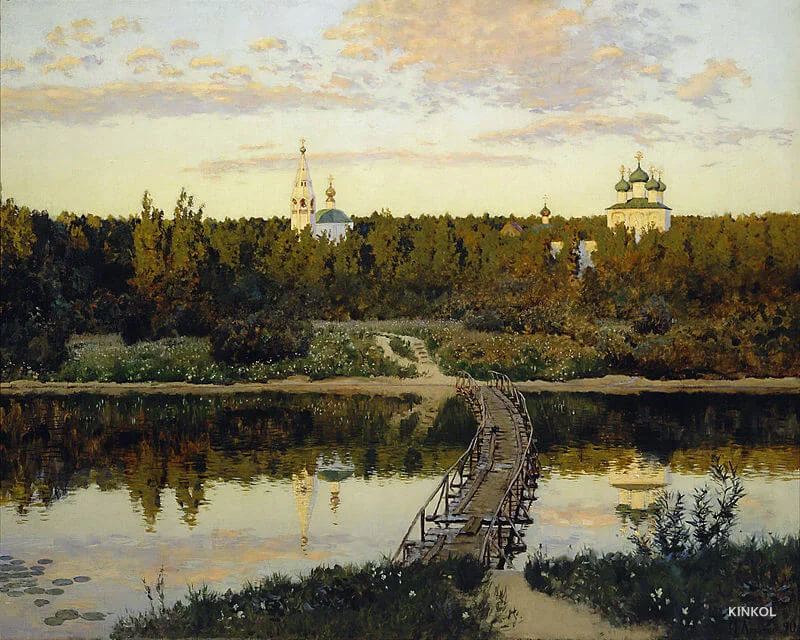
The Assumption Cathedral became the center of cultural and spiritual life in the city. Its austere and ascetic appearance inspired many artists, including Isaac Levitan, who captured the church in his paintings "Quiet Abode" and "Evening Bell." Every year, on the day of the celebration of the Kazan Icon of the Mother of God, a procession is held from the cathedral to the site where the Kazan church once stood.
In 2007, the restoration of the church and the improvement of the Cathedral Hill area began. The fence, viewing platforms, and pedestrian paths were restored. Today, the cathedral not only functions as a religious site but also serves as an important cultural monument, attracting many tourists and pilgrims. Regular services are held in the cathedral.