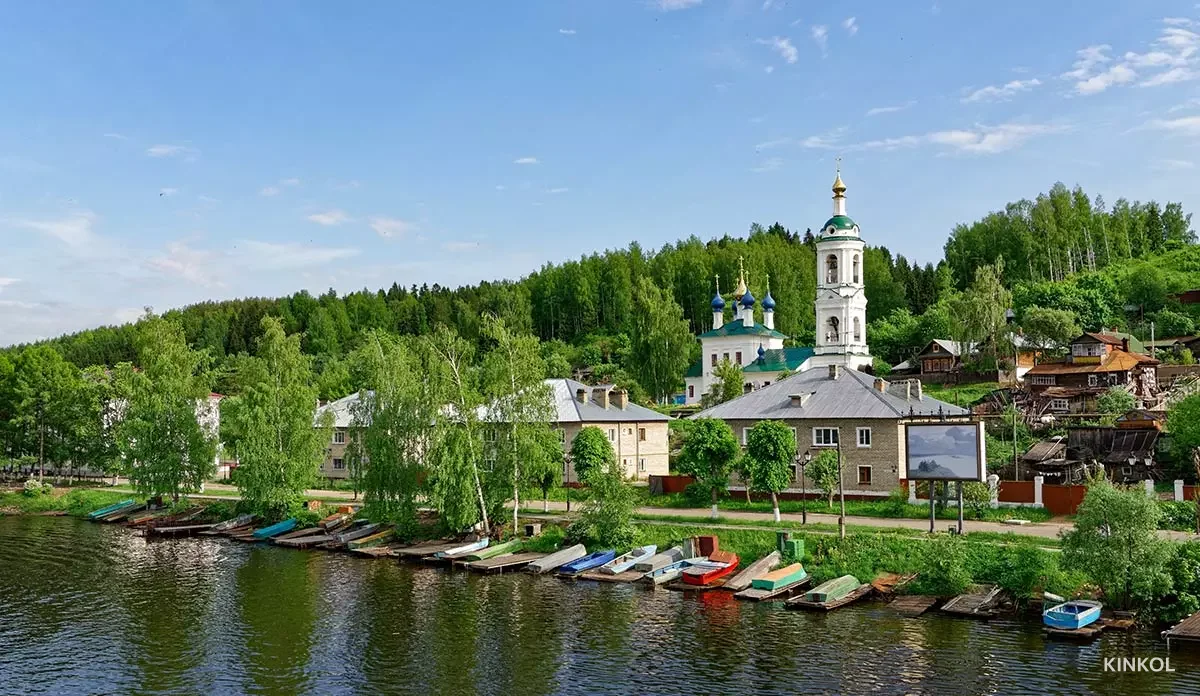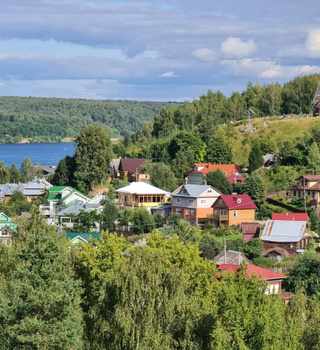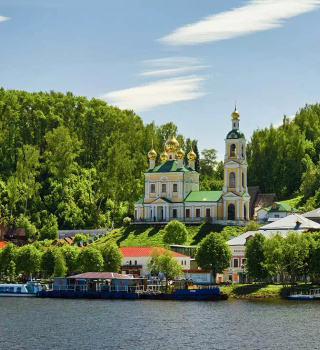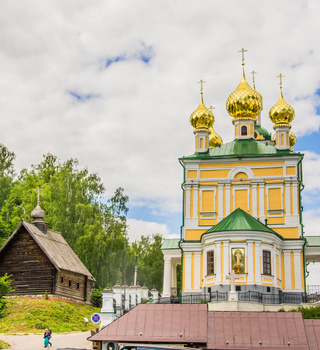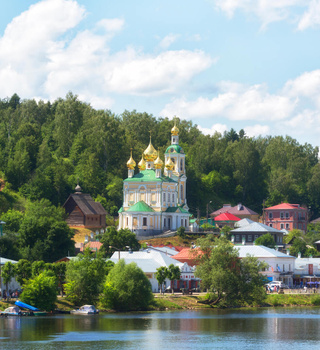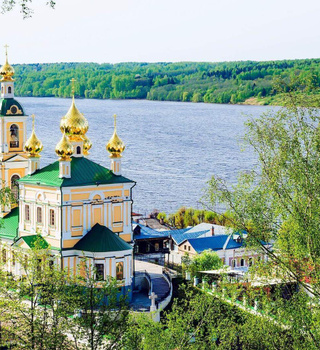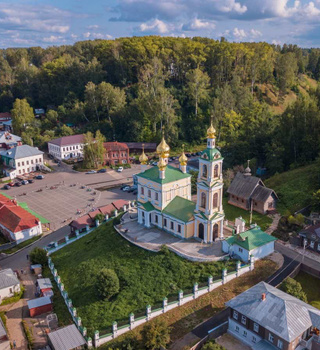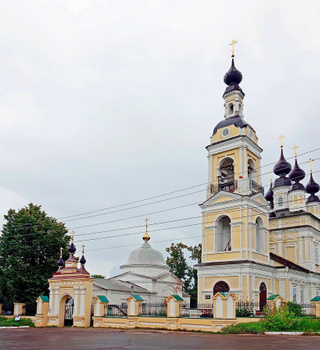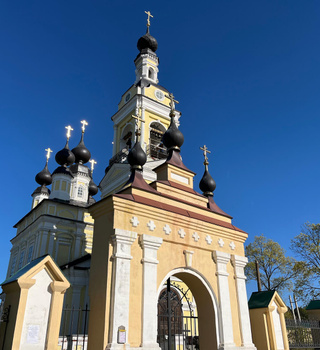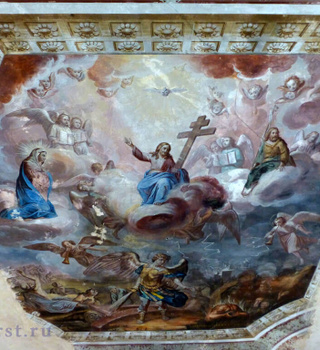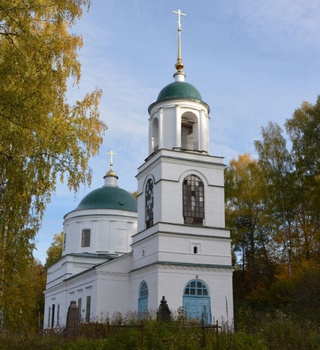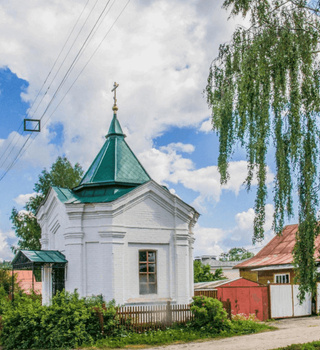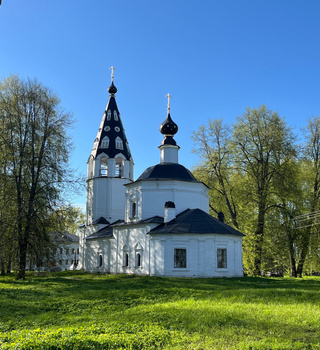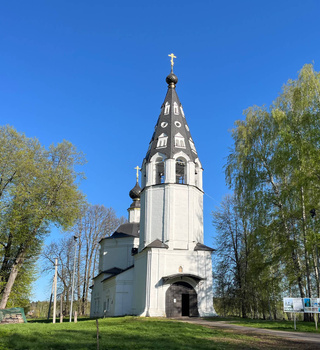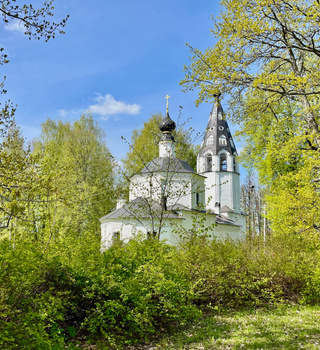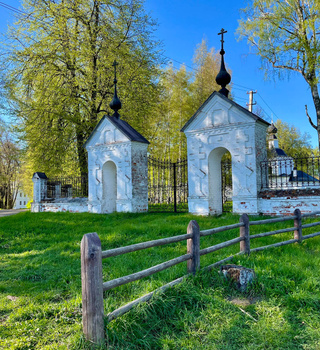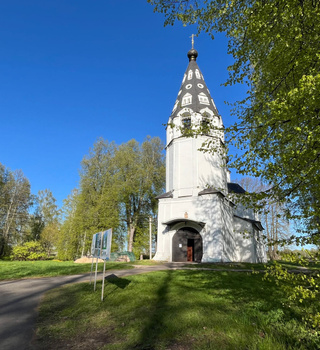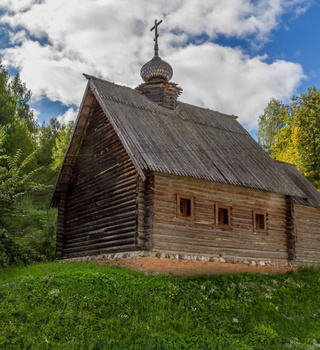
The Church of Saint Barbara the Great Martyr is one of the outstanding examples of Orthodox architecture in Plyos, located on an elevation near the banks of the Volga and at the foot of the picturesque Levitan Hill. This church, built in the style of classicism, not only serves as an important cultural and spiritual center of the city but is also a landmark element of its architectural landscape.
History and Architecture
The Church of Saint Barbara the Great Martyr was built in 1821 on the site of a wooden church that existed earlier and was mentioned as far back as 1694 in the book “Letters and Inspection” by Fyodor Berechinsky. The exact date of the construction of the new stone church is not established, but it is known that in 1702 an antimension was issued for the Church of Saint Barbara. The church's decor indicates that the main construction of the temple was completed in the early 18th century, and the bell tower was added later, in 1821, in the style of mature classicism.
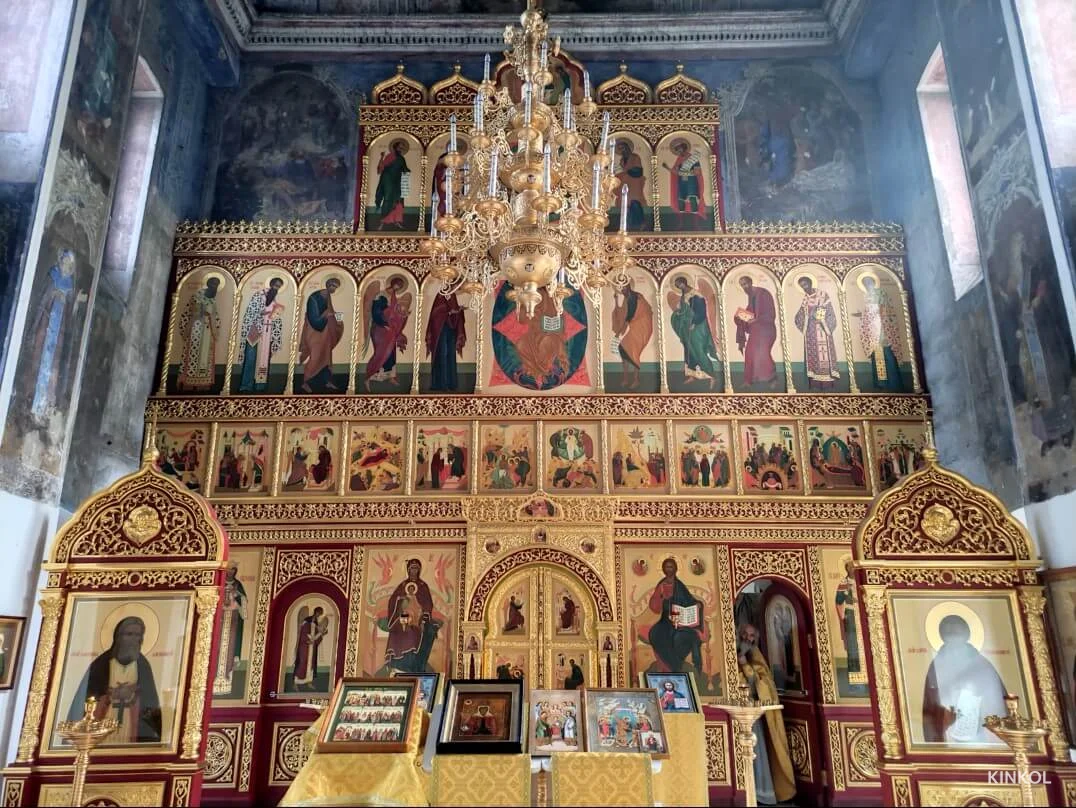
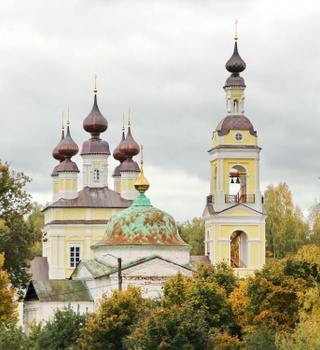
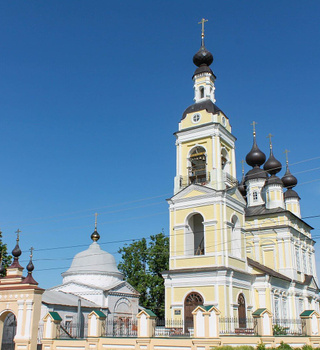
The church is a structure known as a “ship,” with the altar apse oriented to the east and the bell tower to the west. The main volume of the church is executed in the form of a two-light quadrangle, characterized by simplicity and modesty of decoration. Its rectangular windows, framed with cornices and window sills, are accentuated by frame casings on the upper tier. Above the cornice, adorned with dentils, rises a four-pitched roof with five domes on blind drums. The dome of the central cupola, as well as the bell tower dome, received gilding after restoration.
The bell tower, built later, is distinguished by its splendor and is a vivid example of mature classicism. It consists of three tiers: the lower two are quadrangles, and the upper one is a cylindrical belfry with a dome and dormers. High arched openings and columns adorn the facade of the bell tower, and its slightly inclined shape makes it resemble the Leaning Tower of Pisa, attracting the attention of architects and historians.
The Church of Saint Barbara the Great Martyr in Plyos is not only an important historical and architectural monument but also maintains a symbolic connection with one of the most revered saints of Christianity. Saint Barbara, venerated as a protector against lightning and dangers, was a martyr who suffered for her faith in the 3rd century in Turkey. Her steadfastness and martyrdom made her the patroness of people working in risky professions.
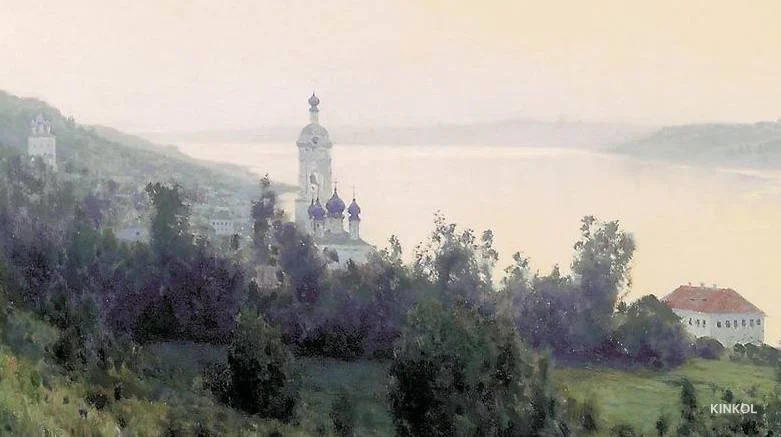
The church is depicted in the famous painting by Isaac Levitan “Evening. Golden Plyos.” In this work, its graceful silhouette with the characteristic bell tower fits perfectly into the panorama of Plyos and serves as a vivid example of how architectural monuments can become part of cultural and artistic heritage.