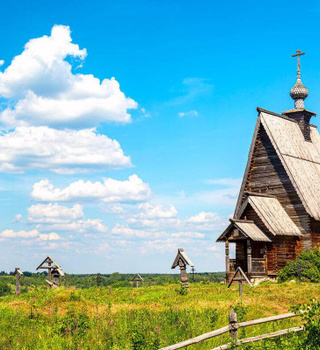
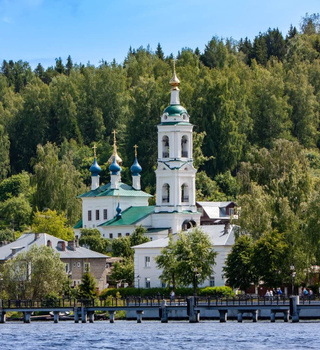
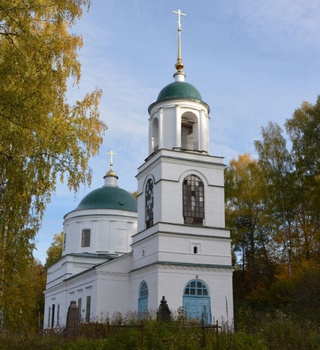
The wooden chapel of Archangel Michael, built in 1825, is a unique monument of wooden architecture. Originally erected in the village of Antonovo in the Privolzhsky District of the Ivanovo Region, it is one of the few remaining traditional rural chapels of the cell type. The main log structure of the chapel is built with a remainder, while the smaller vestibule is built "in the paw" style. The chapel is distinguished by a simple yet expressive volumetric composition, dominated by a high gabled roof octagon with an onion dome. Inside the chapel, the unhewn log walls are preserved, connected by an opening.
The history of the chapel is full of interesting events. According to one version, it was moved to Antonovo from the village of Shchukino in 1855, where the Church of the Exaltation of the Holy Cross and Archangel Michael previously stood. Until 1917, the chapel was part of the parish of the Resurrection Church in the village of Gorki Chirikovykh. During the Soviet period, the chapel was closed and used as a grain warehouse. In 1989, the structure was moved to Plyos, where it was restored and installed next to the Resurrection Church. According to local residents' memories, the chapel was dismantled due to dilapidation, and in Plyos, it was restored from new wood.
From 2005 to 2007, the chapel was used by the Plyos artists' community as an exhibition hall. This gave it new life and allowed it to be preserved as a cultural object. The interior housed exhibitions that attracted the attention of both locals and tourists. In 2018, the structure was consecrated as the Church of Archangel Michael.
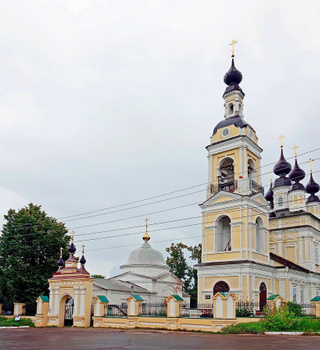
Today, the chapel is not used for regular services and religious holidays, but it remains an important cultural object in Plyos. Located across the road from the Resurrection Church, it complements the architectural ensemble of the city and harmoniously fits into its landscape.