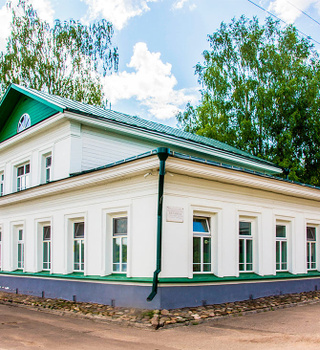
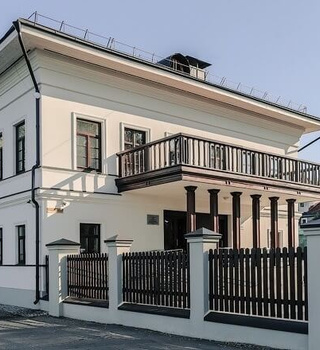
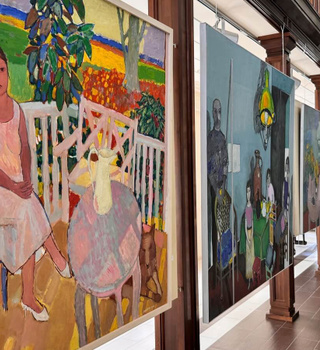
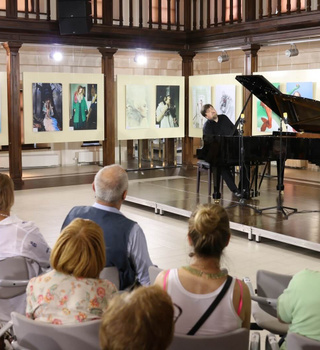
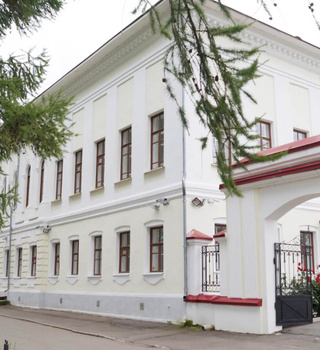
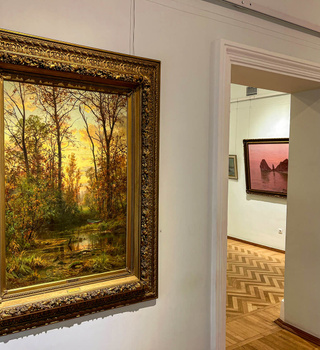
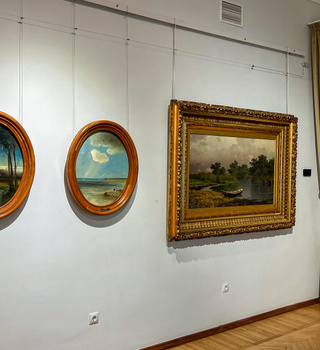
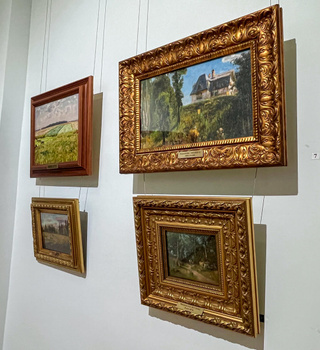
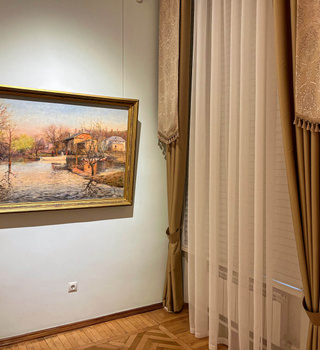
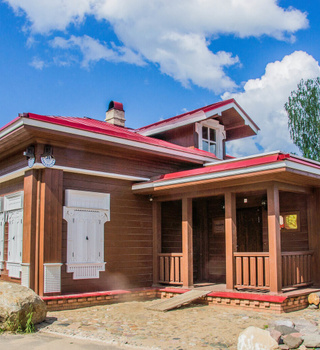
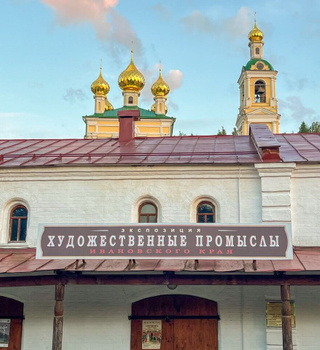
In the Russian Empire, "Prisutstvennye Mesta" referred to buildings where government bodies were located. One such building in Plyos has served various purposes over time: it housed the City Administration, the City Bank, the Higher Primary Male School, and even stored wine in its cellars. Today, this historic building is home to the exhibition "Ancient Plyos and the Ivanovo Land," and also hosts temporary art exhibitions.
Museum and Exhibition Center “Prisutstvennye Mesta” in Plyos
A tip before your trip to Plyos
Subscribe to the «Plyos Walks» channel on social media — we share useful posts to help you prepare for your trip to Plyos!
Beautiful photos and videos, event announcements, interesting places, discounts and promotions, unique routes, and tips from locals!

Temporary Exhibitions
Currently, No Temporary Exhibitions or Events Are Being Held
Permanent Exhibition
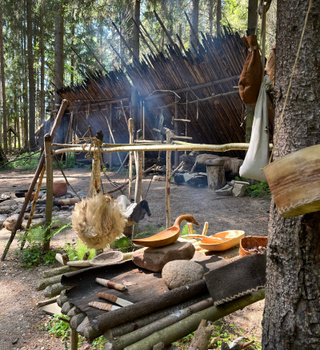
The exhibition "Ancient Plyos and the Ivanovo Land" allows you to get acquainted with the history of the region from ancient times to the early 17th century. Here, unique archaeological finds, anthropological reconstructions, models of ancient fortresses, and other interesting exhibits are collected.
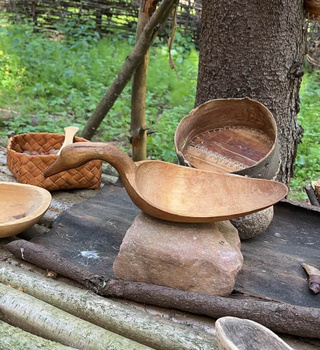
Visitors can see women's jewelry from the 7th century, models of ancient people, their costumes, and household items. Among the exhibits are also arrowheads left from the time of the Tatar-Mongol invasion, cannonballs, chain mail, armor, and swords. Special attention is drawn to a unique cult stone of phallic shape, known as the "stone of love," used in pagan rituals.
The exhibition occupies the basement floor of the building, where five halls with vaulted ceilings are located. Organized chronologically, it vividly demonstrates the historical development of the Ivanovo region based on archaeological collections. The exhibition highlights key stages in the region's history, starting with the first settlements on the banks of the Volga during the Mesolithic, Neolithic, and Bronze Ages, and ending with fortified settlements of the early Iron Age and Slavic settlements that laid the foundation for the fortress city of Plyos.
One of the central exhibits is the "Alabuzhsky Hoard" — a collection of women's jewelry from the 7th century AD, discovered at the site of the Penkovskoye settlement. These unique artifacts were sacrificed during the construction of the fortress wall. For the first time, 398 items from this hoard are presented, which is an important event for archaeologists and historians.
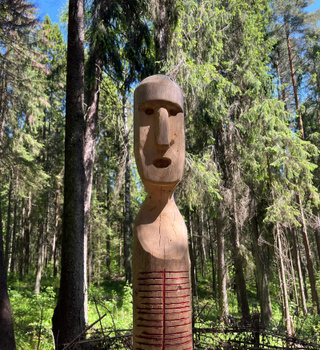
Among other unique exhibits are cult stones found in Plyos and its surroundings, as well as an amulet "snake stone" from the 12th-13th centuries, symbolizing dual faith — simultaneous veneration of the Orthodox God and pagan gods.
The exhibition is complemented by anthropological reconstructions and large-scale models, allowing visitors not only to learn about the region's history but also to see what the ancient inhabitants of these places might have looked like. With the help of a virtual fitting room, anyone can "try on" an ancient Russian women's costume or chain mail, immersing themselves in the atmosphere of the distant past.
Location
Russia, Ivanovo Oblast, Plyos, Sobornaya Gora St., 1
Similar museums in Plyos
-
-
-
-
-
-
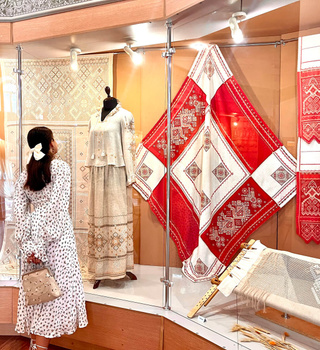
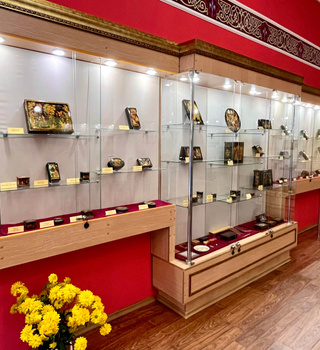
Exhibition “Artistic Crafts of the Ivanovo Region”
 Embroidery, weaving, lacquer miniatures, and jewelry art