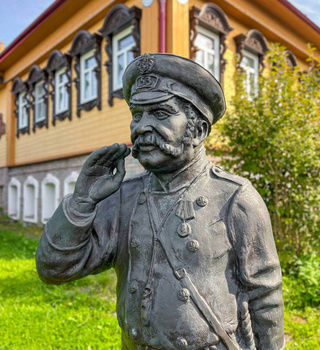
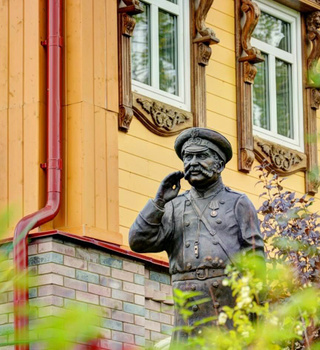
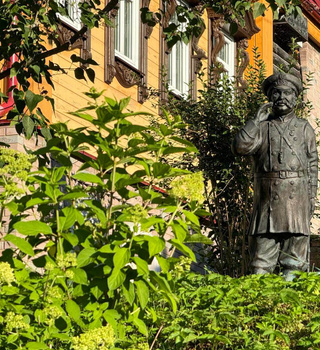
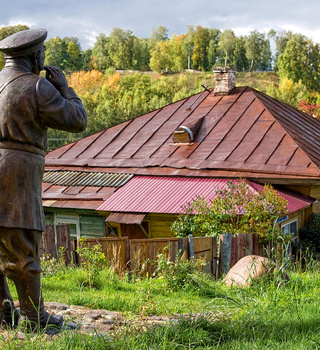
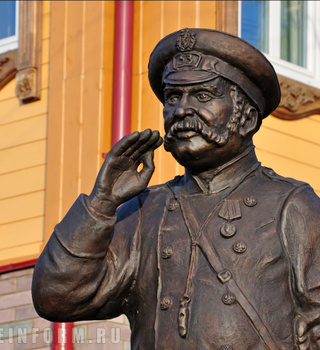
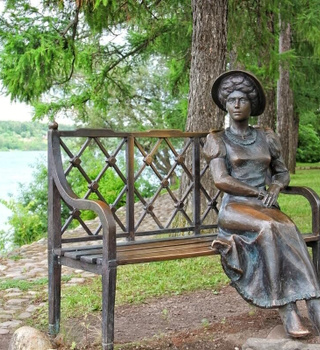
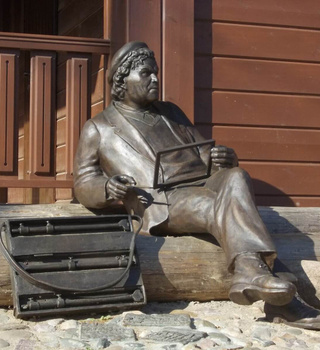
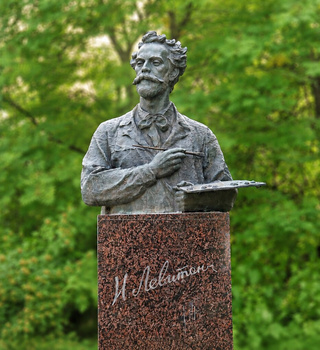
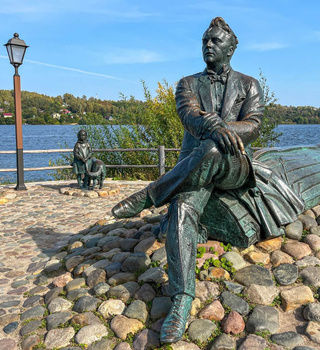
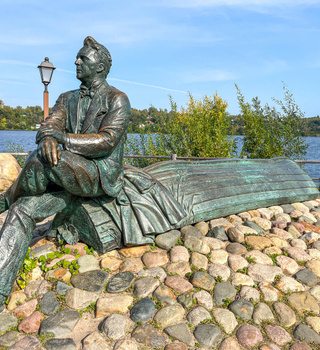
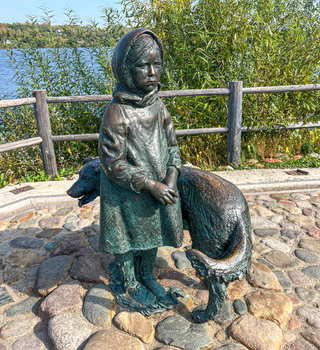
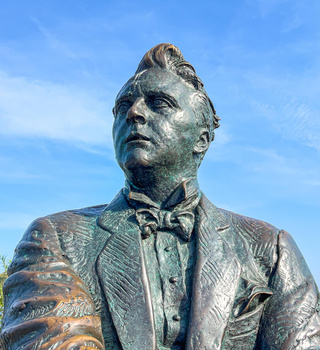
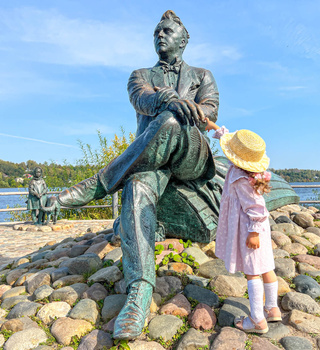
The sculptural complex in Plyos features a bronze figure of the artist, in whose features the images of the great Russian landscape painter Isaac Levitan can be discerned. The artist is depicted at an easel working on Levitan's famous painting "Above Eternal Peace." It was installed in memory of the creative years Levitan spent in this small town on the banks of the Volga.
Levitan's Visit to Plyos
In the spring of 1888, Isaac Levitan, along with friends, traveled by steamboat along the Volga from Nizhny Novgorod in search of inspiration for his future works. The small town of Plyos, nestled in greenery with a log church on a high hill, immediately caught his attention. Levitan fell in love with Plyos and spent three consecutive summers there. This period became significant for the artist, during which he created 23 famous paintings and numerous studies, sketches, and drawings, totaling about 200 works. These works brought him wide recognition and acclaim.
The Painting "Above Eternal Peace"
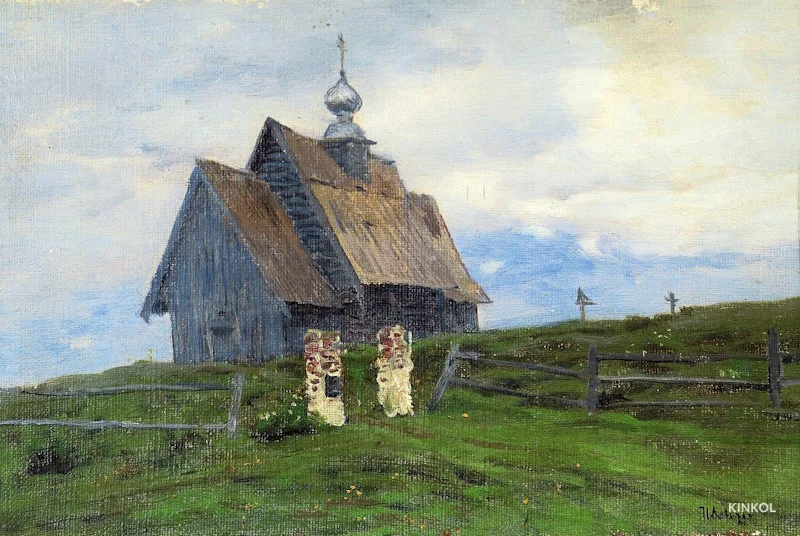
The sculpture depicts the moment of creating one of Levitan's most famous works – "Above Eternal Peace." There are several versions of which exact place is depicted in this painting and which church served as the prototype for the one painted by the artist. Sophia Kuvshinnikova, Levitan's student and lover, claimed that the painting was made near Lake Udomlya, but the church in the painting was replaced with a cozy church from Plyos. Some researchers of Levitan's work believe that the artist used the study "Wooden Church in Plyos at the Last Rays of the Sun" from 1888 to paint the church. This study depicts the burned-down Peter and Paul Church, which stood on the site of the current Resurrection Church.

Controversies Surrounding the Sculpture
The sculpture was installed in 2012 in memory of Levitan and his creative years spent in Plyos. However, its installation sparked quite a bit of controversy. Many researchers of Levitan's work argue that the sculpture does not convey the true features of the artist. Levitan was a handsome, tall, and slender man, while the sculpture's depiction significantly differs.